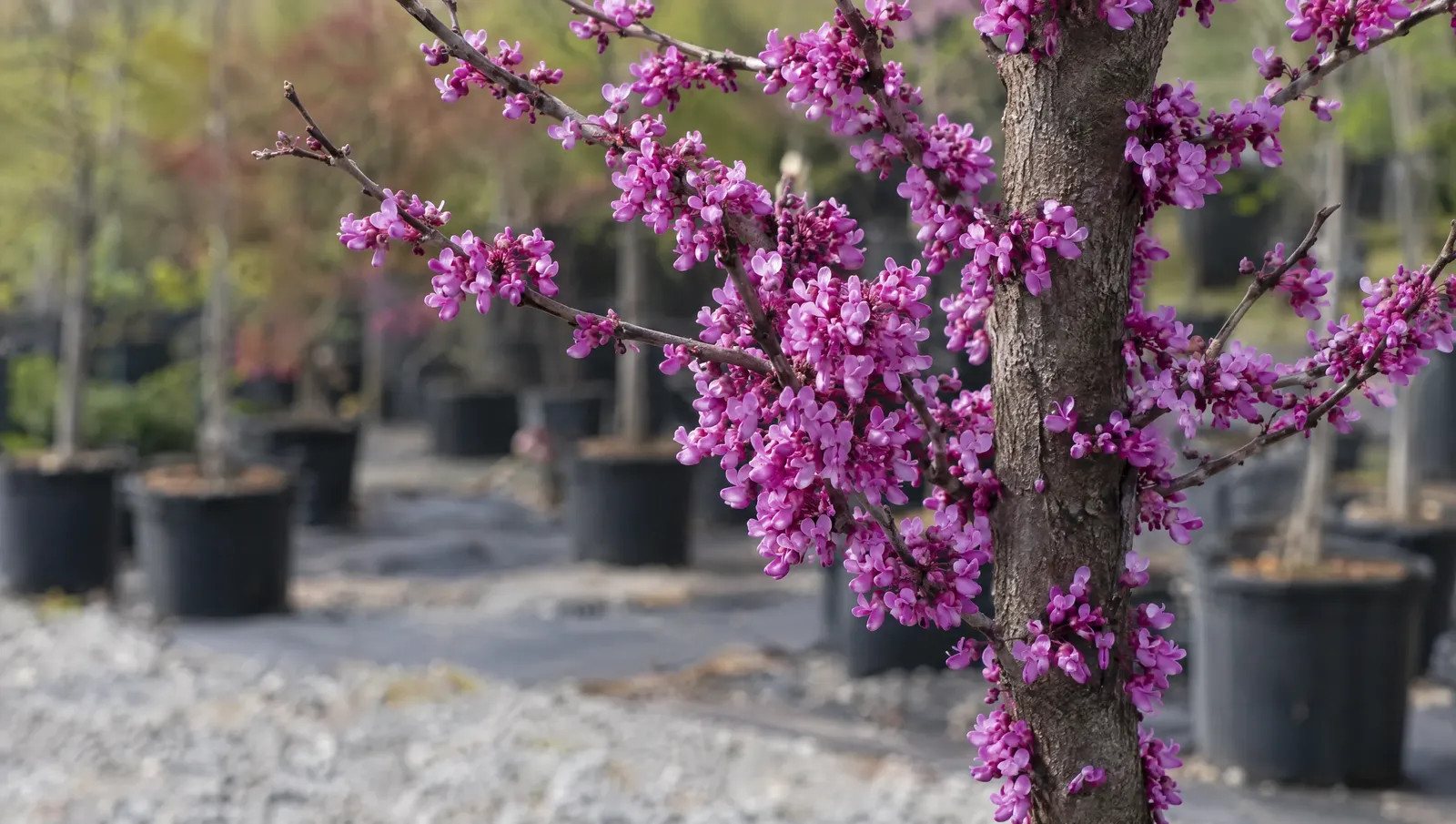
EasternRedbud

Plate 102

Redbud (Cercis)

Cercis canadensis

USDA 4-9

Eastern Redbud

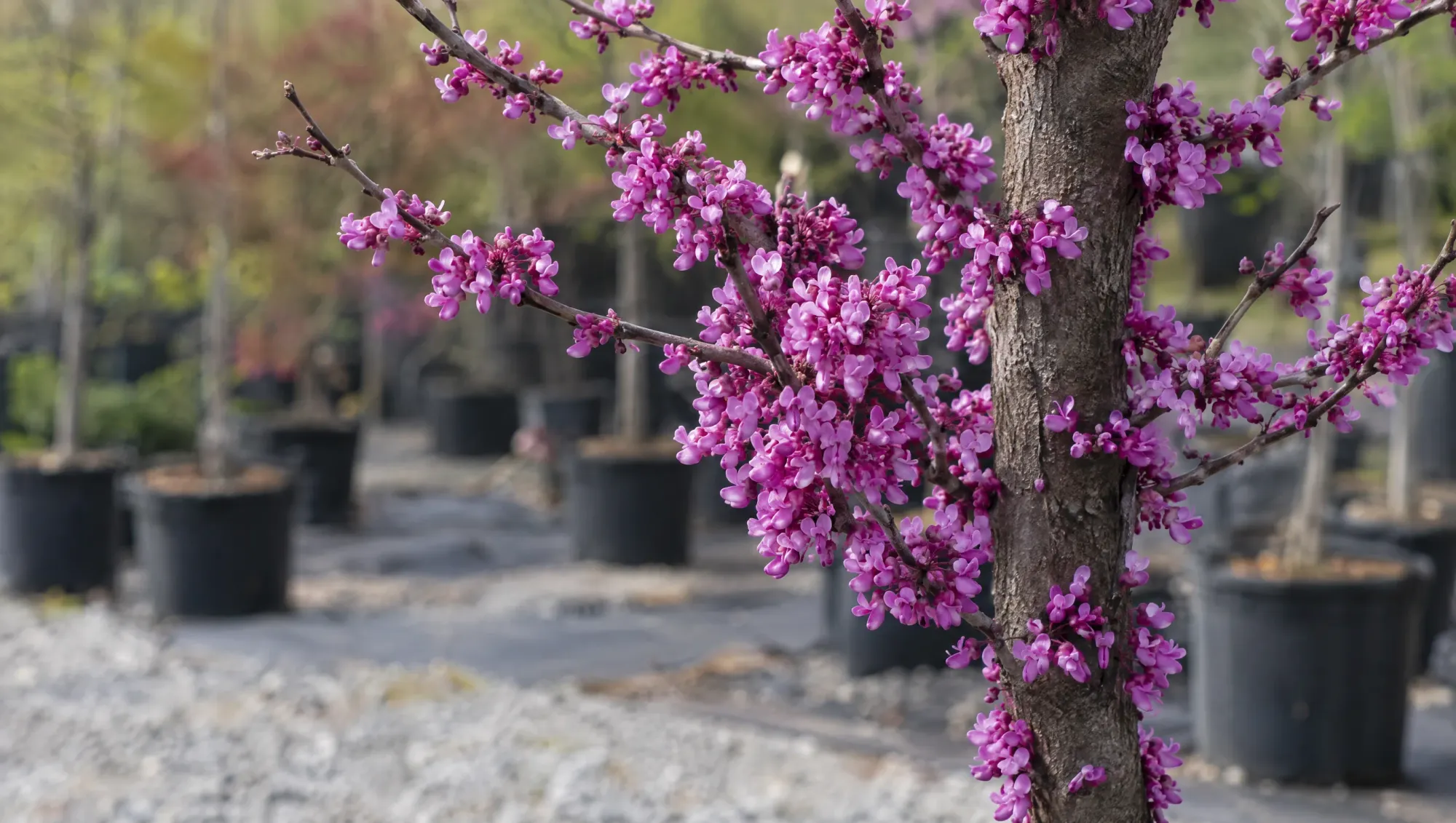
This native deciduous tree blooms with pink to rose-purple flowers in early spring, reaching 20-30 feet tall. It adapts to full sun or part shade, tolerates drought well, and attracts hummingbirds, pollinators, and butterflies.

Heart-shaped, alternate, 3-5 inches long, smooth margins, prominent veins.

Good for

  • Specimen
  • Mass planting
  • Street tree
  • Naturalized planting

At a glance

Mature size
20-30' h x 20-35' w
USDA zones
4-9
Light
Full sun to part shade
Water
Moderate
Growth rate
Moderate to fast when young, then moderate
Soil
Moist, well-drained, pH 6.0-8.0
Habit
Rounded, vase-shaped when young, multi-stemmed
Blooms
Pink to rose-purple, magenta, early to mid-spring, april-may
Foliage
Deciduous
Drought
Tolerant once established
Native status
Native to eastern and central north america
Deer resistance
Deer rarely harm
No plant is deer-proof.

A closer look

Eastern RedbudFig. 1
Eastern Redbud, photo 1 of 3

Pruning

Prune after flowering in spring; remove dead, damaged, crossing branches; thin crotches when young; do not remove more than 1/3 of branches.

Good for wildlife

  • Attracts hummingbirds
  • Attracts pollinators
  • Attracts butterflies
  • Birds feed on seeds

Family owned and operated

We'd love to see you.